Independent purchase guidance in Málaga and along the Costa del Sol.
I offer purchase guidance in Málaga and the surrounding area, at every step of the buying process, with structural insight and no stake in the sale.
★★★★★ 5/5 on Google Book an introduction
Buying a home in Spain also means choosing a different life.
You're buying a place, a climate and a way of living. That's something different from buying your home in the Netherlands or Belgium all over again, only cheaper and with sun. A home in Andalusia is built differently and needs different maintenance. In the campo, the Spanish countryside, that applies even more.
If you're looking for a finished home that never needs anything, you'll rarely find what fits. If you weigh location, view and lifestyle above perfection, you often find exactly what you were looking for, sometimes in a home that still needs a plan.
That's why we go through four things in advance, before we look at a single property:
- What you want to change in your life, and what you leave behind.
- What your budget gets you here. Honest and concrete, so you know what is for sale at your amount.
- What counts as normal maintenance for this type of home and this climate, so a patch of limescale doesn't immediately make you doubt.
- Whether you're ready to buy: your financing is arranged or your current home is on the market, and you have a buffer for buying costs and renovation.
You make an offer because you want to buy, not to see where you end up.
I'm your fixed point of contact throughout and oversee every phase, from the first viewing to the handover of the keys, even if you still live in the Netherlands or Belgium.
Espacio360 versus the traditional estate agent.
In Spain, an estate agent almost always represents the seller, not you. That means no one is on your side of the table, unless you arrange that yourself.
| Espacio360 purchase guidance | Traditional buyer's agent | |
|---|---|---|
| Focus | I think from your goal, whether that's living there yourself or a second home you'll enjoy for years to come. | The transaction is central, not what comes after. |
| Insight | I go through structural condition, permits and future renovation options step by step with you: a first impression at the viewing, a complete inventory at the structural survey. | You mainly hear about price and location. Technical or legal risks you discover later, yourself. |
| Result | A home that is structurally sound, legally in order, and matches your plans. | A purchased home. Whether it also suits your goals only becomes clear afterwards. |
First feel it, then map it out.
At a viewing you feel whether a place suits you. Most buyers pay attention to atmosphere, view and layout. Understandable, that's what stands out immediately. With twenty years of construction experience, I already pick up the first signals during that same viewing: structural points of attention, renovation potential and maintenance still to come.
The rest comes at the structural survey, during a second visit where I take the time to open everything up. Not only at the notary's office, but at the moment you can still do something about it.
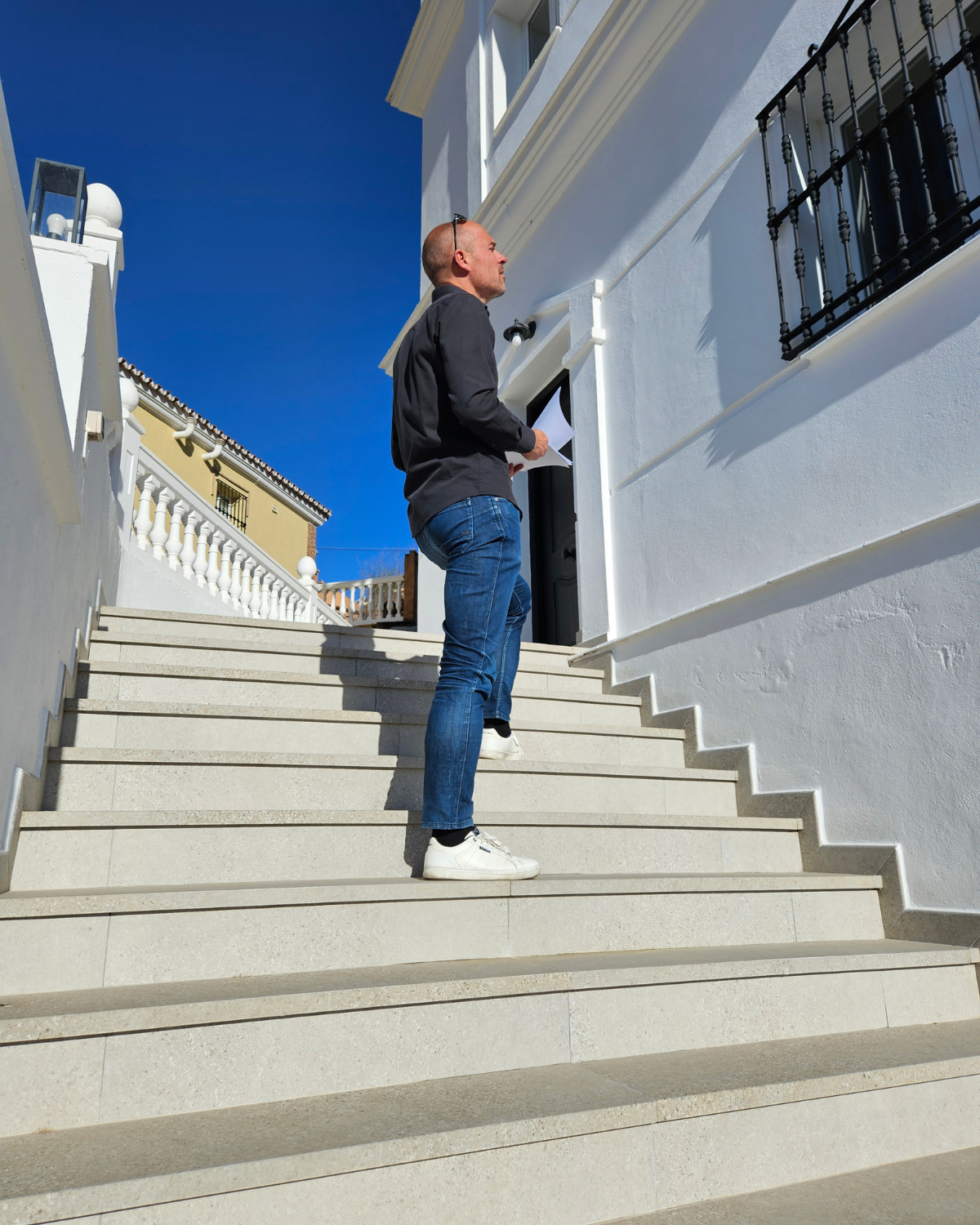
The buying process in five steps.
Introduction and wishes
Together we set the budget, wishes and a realistic search strategy. You know exactly what's achievable and what to expect at every viewing.
Search and selection
I translate your wishes into a sharp search profile and filter listings by location, structural condition and future use. I include new-build where relevant. Through your personal portal you always have your search profile, shortlisted homes, documents and appointments in one place.
Viewing and structural survey
At the first viewing you feel whether the place suits you, and I give my first impression. If the home fits, we come back for the structural survey: a complete inventory of installations, damp, cracks, roof and outdoor space, with advice on every point. No surprises, and insight into what really matters.
Negotiation and checks
I coordinate the bidding process, bring in the lawyer and notary, and carry out a thorough risk and cost analysis, so you negotiate from knowledge.
Handover and aftercare
I guide you personally right through to the notary. After that I help with practical matters and, if wanted, connect you with the right party for rental and management.
I work for you. Not for the seller.
We agree a fixed fee for my guidance in advance, including the structural survey. That fee is independent of the final purchase price, so I have no interest in a higher offer. You pay it in three steps that follow the process:
- 15% at the start, around the first viewing
- 35% as soon as you and the seller agree on the price
- 50% at the handover at the notary
If the seller's agent shares part of their commission, I deduct it in full from your invoice. At the notary you see in black and white how every amount is split. No surprises, that's the starting point.
| Cost item | Existing property | New build (obra nueva) |
|---|---|---|
| Transfer tax / VAT | 7% of the purchase price | 10% of the purchase price |
| Notary and land registry costs | approx. €1,000 – €2,000 | approx. €1,000 – €2,000 |
| Lawyer | approx. 1% of the purchase price | approx. 1% of the purchase price |
| Espacio360 purchase guidance | Fixed fee, agreed in advance, structural survey included | Fixed fee, agreed in advance, structural survey included |
| Total buyer's costs | approx. 9 – 11% of the purchase price | approx. 13 – 15% of the purchase price |
Example calculation for a purchase price of € 400,000
Existing property: additional costs of roughly € 35,000, or nine to eleven percent of the purchase price.
New build: additional costs of roughly € 57,700, or fourteen to fifteen percent of the purchase price.
Where else I can be of value to you.
Already have a home in mind, or planning to renovate after buying? Then I can help in other ways too.
Structural survey
Already included in the purchase guidance. Found a home some other way? Then I also assess the technical condition separately, with a clear report within 48 hours.
See the structural survey →Renovation management
After the handover you may want to renovate, upgrade or make the home more sustainable. I guide that process from first sketch to completion.
See renovation management →Looking for a home with renovation potential instead of a move-in ready one? That's the core of my approach.
See the full concept →What buyers ask me most often.
What do I need to buy a house in Spain?
At the very least an NIE number, a Spanish bank account, legal guidance and a clear financing plan. I help you get this in order in advance, so you can act faster and with more confidence once the right home comes along.
Can I, as a foreign buyer, get a mortgage in Spain?
Yes. Spanish banks typically finance sixty to seventy percent of the appraised value, depending on income and situation. I map this out with you in advance, so you know what's achievable before making an offer.
Do I need a lawyer for the purchase?
Yes, and it's not a formality. A lawyer checks ownership, debts, permits and contract terms. I work with a regular lawyer on the Costa del Sol and coordinate this as part of the guidance.
What does purchase guidance in Spain cost, and when do I pay?
You agree a fixed fee in advance, and the structural survey is included. You pay in three steps: 15% at the start, 35% when the price is agreed and 50% at the handover. The fee is independent of the purchase price, so I have no interest in a higher offer.
Is buying a home in the campo different from buying in a town?
Yes. In the countryside, homes are more often built in phases or by the owner, infrastructure is different and permits and land classification play a bigger role. That's why I look not only at the house but also at the paperwork around it, before you make an offer.
What about rental regulations in Andalusia?
Regulations for tourist rental differ per municipality and change regularly. If you're considering renting it out, I check this as standard, as part of the guidance, so you know before buying whether a home can be rented.
Buying a home in Málaga starts with a good conversation.
Book an introduction and find out what's possible within your budget and plans. Six short questions, done in a minute.